1 Why study applied stats?
Statistics are everywhere
A general approach to answer questions with data.
Central to experimental sciences, e.g. biology, psychology, physics
Fundamental to experimental science
Biology, medicine, physics, you name it!
Consider the following questions:
- is is better for stress to be around nature
- how can you calm yourself after an adverse interaction
Business and politics also heavily rely on statistics to make decisions (hopefully!).
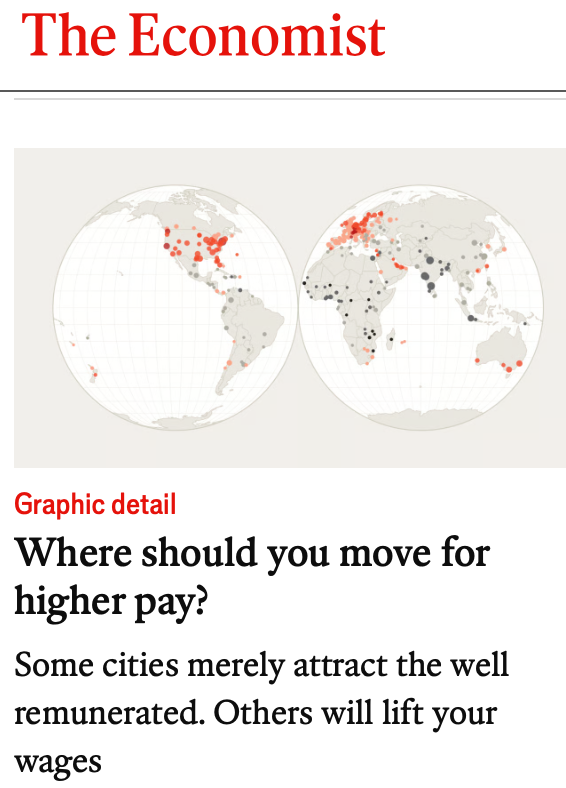
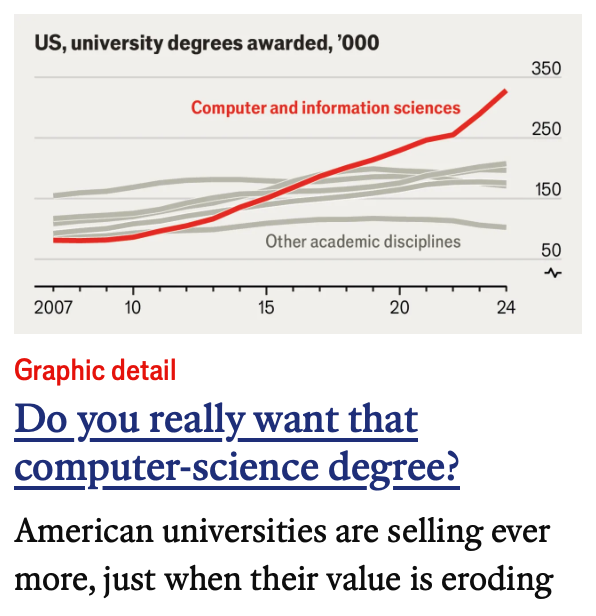
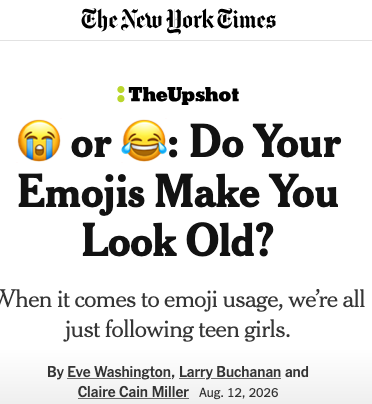
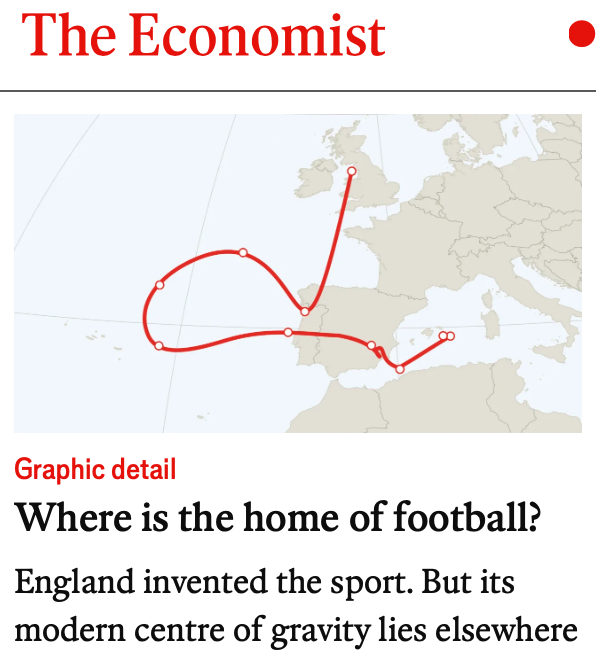
In Figure 1.1, six newspaper articles answer a simple question using a statistical approach.
What would you answer off the top of your head? Does the article agree or disagree?


“Can’t I just use AI?”
In the last two decades, statistics has increasingly become known under other names: data science, machine learning, artificial intelligence. These fields all rest on the same statistical foundations — AI doesn’t replace statistical thinking, it’s built on it.
1.1 A worked example: Foramitti et al. (2025)
To fix ideas, let’s focus on one study: Foramitti et al. (2025) analyzed the sentiment of US Billboard song lyrics from 1973 to 2023.
In the statistical parlance:
Similarly, supporting H2a, the monthly average sentiment in popular music lyrics correlated negatively with time (r = −.78, 95% CI [−0.81, −0.75], p < .001).
around the onset of COVID-19 in the US, the analysis yielded a lower adjusted R² of 0.475. Here, we found a small but significant interaction period × time (β = −0.007, 95% CI [−0.011, −0.003], t(49) = −3.626, p < 0.01) (Supplementary Table S5, Figure S3). However, this effect points in the opposite direction as hypothesized initially.
In plain English:
- Songs are sadder with time
- Songs are not always sadder after societal crises
1.2 Statistical analysis is a journey
From question → data → statistics → conclusions.
It requires complex technical tools, domain knowledge, and critical thinking.
The reward: a clear and adequate representation of the world — which brings joy (or empowerment, an increase in ability, …).